



Best Bed Sheets Guide: Fabric, Thread Count, Percale vs Sateen
There is a moment, familiar to anyone who has ever checked into a great hotel, when you pull back the covers and feel it — the perfect combination of cool, crisp sheets, a perfectly weighted duvet, and pillows that seem to have been arranged just for you. You think: I want this at home.

Your bed is the most used piece of furniture in your home, and the one with the most direct impact on how you feel each day. The quality of your sleep shapes your mood and your energy, and your environment shapes your sleep. Great sheets, in that sense, are essential.
This guide will help you learn how to choose sheets with confidence — by fabric, weave, thread count, and fit — and then show you exactly how to make a bed that feels as considered as the rest of your home. Whether you're building a sleep sanctuary from scratch or simply ready to trade up from sheets that have never quite felt right, there’s a perfect set for you.
_____
Choosing the perfect sheets comes down to five factors: fabric, thread count, weave, fit, and care. For most sleepers, a long-staple cotton percale or sateen in a 300–500 thread count offers the best balance of softness, breathability, and durability. Percale is crisp and cool, making it ideal for warm sleepers, while sateen is silky and warm, better suited for those who run cold. Always look for a deep-pocket fitted sheet (at least 15 inches) to ensure a secure fit on modern mattresses. Once your sheets are chosen, a well-made bed — from a mattress pad up through the sheets and duvet — dramatically improves both sleep quality and the feeling of retreating to a sanctuary each night.
Why Your Sheets Matter More Than You Think
Consider this: You’ll spend roughly a third of your life in bed. That's more time than you’ll spend in your car, at your desk, or on your sofa, and yet sometimes well-crafted bedding is an afterthought.
Research consistently points to the sleep environment as a meaningful factor in how quickly we fall asleep and how deeply we stay there. Skin temperature regulation plays a central role in sleep onset, and if sheets trap heat or cause friction, then they can subtly disrupt the body's natural cooling process that tells the brain it's time to rest. And since your sheets are in direct contact with your skin for 7–9 hours a night, premium fabrics that are breathable and gentle offer essential comfort, especially for those with sensitive skin.
Then, there’s the psychological effect. Research on environmental cues and behavior suggests that a visually calm, aesthetically pleasing sleep space can meaningfully support an evening wind-down routine (link to article). A beautifully made bed with buttery sheets signals that quality rest is on the way. Just as the right women’s pajamas set the tone for sleep, your sheets complete the picture, both in how they feel and how they look.

Best Sheet Fabrics: Percale, Sateen, and Silk
To choose your perfect sheet fabric, consider how you sleep, your preferred texture, and the time of year. The right answer is different for everyone, though natural fibers offer something for every sleep style. Just as you'd choose breathable Pima cotton pajamas for warm nights or reach for silk pajamas when you want something more luxurious, your sheets deserve the same thoughtful approach.
- Percale cotton is crisp and cool, with breathable comfort that's ideal for hot sleepers and warmer climates. It gets softer with every wash, much like a beautifully broken-in button-down shirt.
- Sateen cotton is subtly lustrous with slightly more heft. It’s still breathable, but warmer and silkier, making it the preferred choice for cold sleepers or cooler months.
- Silk offers natural temperature regulation, hypoallergenic properties, and a unique gentleness on skin and hair that makes it exceptional for pillowcases.
Don't Do This: Blended fabrics marketed as "soft" with high polyester content may feel smooth in the store, but they tend to trap heat, pill quickly, and lack the breathability of natural fibers.
What Thread Count Is Best for Sheets?
Best thread count for sheets: Look for sheets in the 300–500 thread count range made from long-staple cotton. Within that range, with quality fibers, you’ll find sheets that are soft, durable, and only improve with washing. Above 500, additional thread count rarely improves feel and is often a sign of artificially inflated counts.
Thread count is one of the most misunderstood concepts in the sheet market. The number refers to how many threads are woven into one square inch of fabric, but that figure is only meaningful when the underlying fiber is high-quality.
A 400-count sheet made from long-staple Peruvian Pima cotton will feel dramatically better than a 1,000-count sheet made from short-staple or multi-ply thread, where some manufacturers artificially inflate the count by twisting multiple thinner threads together and counting each one.
Weave and Weight — The Details That Define the Feel
Percale vs. sateen sheets: Percale is woven in a simple one-over, one-under pattern that creates a matte, lightweight, crisp sheet with excellent breathability, which is ideal for hot sleepers and warm months. Sateen uses a four-over, one-under weave that produces a smoother, more lustrous surface. It's subtly heavier and warmer, with a gentle sheen that catches the light beautifully, making it the better choice for cold sleepers or fall and winter use.
If fabric is the foundation, then weave is the architecture. The same long-staple cotton can produce two completely different sheets depending on how it’s woven.
Beyond weave, GSM (grams per square meter) is a useful indicator of weight and substance. A higher GSM means a denser, more substantial sheet.
Getting the Fit Right: Sizing, Depth, and Why It Matters
Fit is the most overlooked factor in sheet shopping, and the most frustrating to get wrong. A sheet that pops off the corners at 2am is frustrating, no matter how beautiful.
Before you buy, measure your mattress depth and add the height of any mattress topper. Most modern mattresses with a topper require a fitted sheet with a pocket depth of at least 15–18 inches. Elastic quality matters just as much as pocket depth. Look for fitted sheets with full-perimeter elastic rather than corner-only elastic, which is far more likely to slip.
How to Make a Hotel-Style Bed at Home
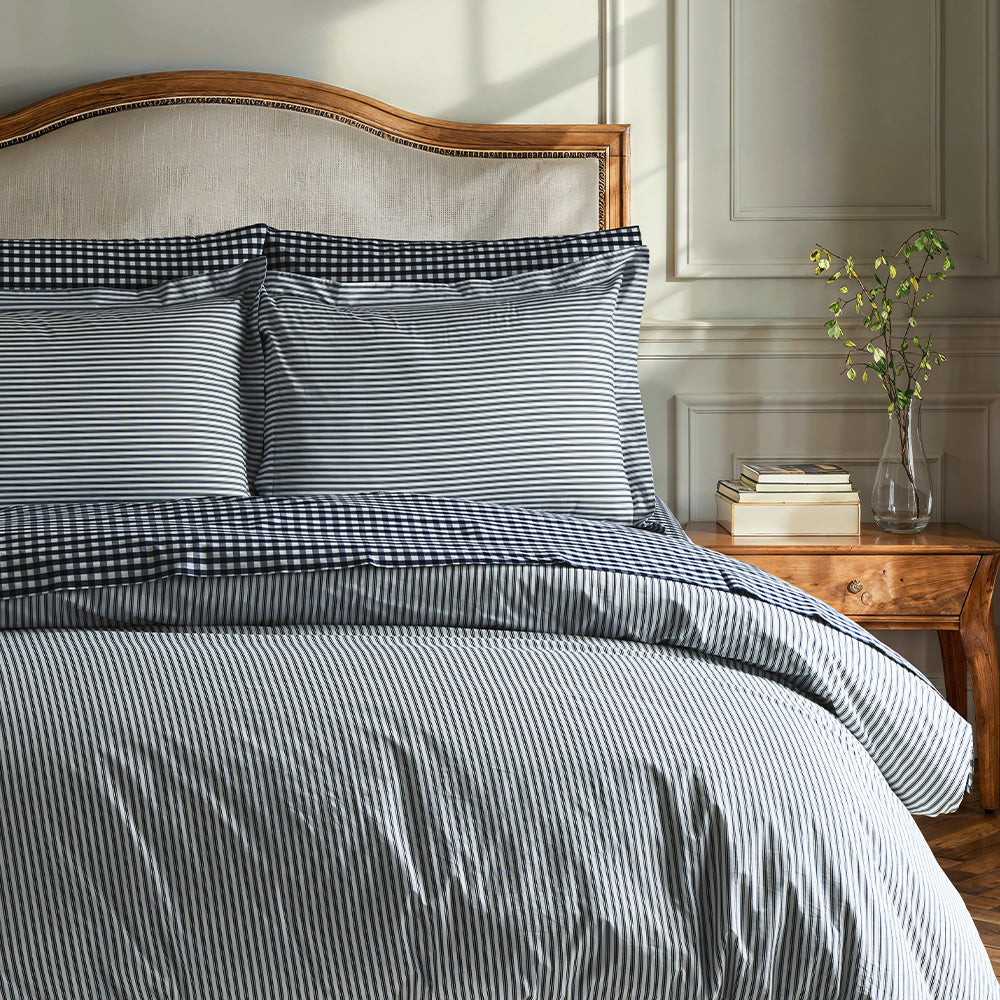
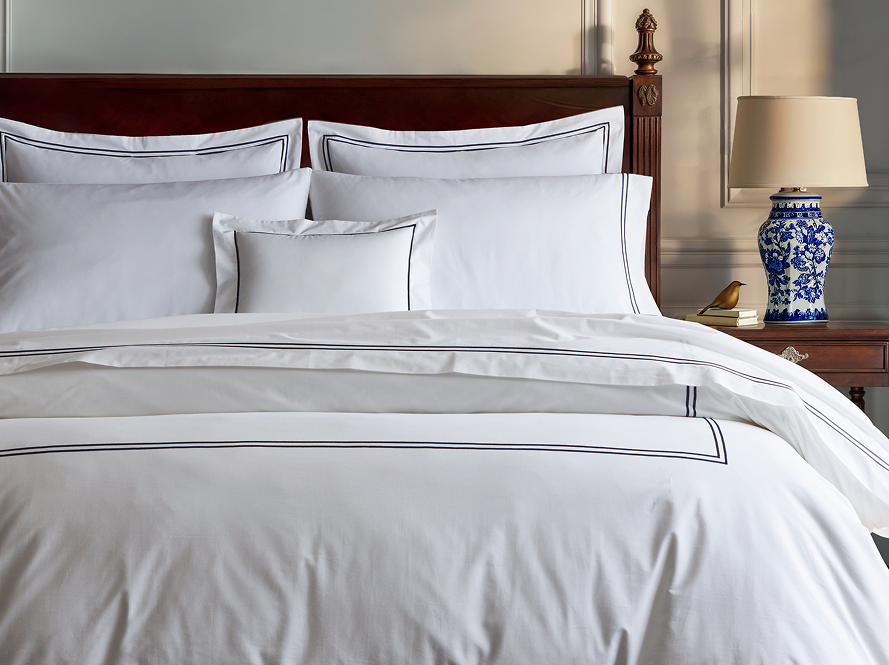
How to make a bed like a hotel: Start with a quality mattress pad, add a taut fitted sheet with deep pockets, layer a flat sheet with hospital corners tucked at the foot, center a full duvet on top, arrange pillows from largest to smallest, and finish with a folded throw across the lower third. The layering and the details create the effect.
In a thoughtfully created sleep environment, each layer of bedding has a considered purpose. Pair your bed-making routine with a sleepwear collection that matches the same standard of comfort and finesse. Here's how to build your perfect bed from the bottom up.
The Mattress Pad
Start with a quality mattress pad to protect your investment and provide a smooth, stable base for your sheets.
The Fitted Sheet
Pull taut from corner to corner. A well-fitted sheet should lie completely smooth. Any excess fabric is a sign the pocket depth is too generous for your mattress, which will cause slipping overnight.
The Flat Sheet
Lay your flat sheet with the decorative hem facing down so that when you fold the top back, the hem is displayed right-side up. Tuck the foot firmly under the mattress and create a 45-degree hospital corner on each side by lifting the side of the sheet, folding it onto the mattress in a neat diagonal, and tucking the remainder underneath. Fold the top 6 inches back over the duvet for a polished finish.
The Duvet
Shake your duvet out fully before placing it, and center it with equal overhang on both sides and at the foot. For inserting a duvet into its cover without bunching, use the burrito method: lay the cover inside-out flat on the bed, place the duvet on top, roll both together tightly from the foot up, reach inside and flip the cover right-side-out as you unroll from the head down.
The Pillows
Layer from largest to smallest, back to front. Sleeping pillows go closest to the headboard, and shams or decorative pillows go in the front if you have those. Do a single firm press down the center of each pillow — the "chop" — which gives a thoughtful finish. For a personalized touch, monogram pajamas and monogram pillows create a polished bedroom aesthetic, with just a few carefully chosen letters added (link to monogram article, when published).
The Final Layer
Fold a cashmere throw in thirds lengthwise and drape it across the lower third of the bed. This final layer adds texture, warmth, and a visual anchor that grounds the whole composition.
How to Wash Your Sheets to Keep Them Beautiful
With quality sheets, care is an investment in longevity. Wash every one to two weeks, or weekly if you sleep hot, have allergies, or share your bed with pets. Use a gentle cycle with cool or warm water (never hot, which weakens fibers over time), and a mild detergent without brighteners or bleach. When possible, line dry or tumble dry on low heat.
For convenient storage, fold your clean sheet set and store it inside one of its own pillowcases for a neat, dust-free bundle that's easy to grab and identify at a glance. As for folding a fitted sheet — stand holding it lengthwise, tuck one corner inside the other, repeat with the remaining two, lay it flat, and fold into a clean rectangle. It takes a few tries, but the results are satisfying.
How Many Sheet Sets Do You Need?
A reliable starting point is three sets per bed minimum: one on the bed, one in the wash, and one in reserve. This rotation keeps your sheets fresh without the stress of needing to wash and dry in a single day, and it extends the life of each set by reducing how often any one of them is laundered.
Beyond the baseline, consider building a linen wardrobe seasonally. A lighter percale set is cool and airy for spring and summer, and a warmer sateen or flannel adds comfort for fall and winter, ensuring your bed feels appropriate to the moment. It's the same instinct behind building out a sleepwear collection for the seasons: the right fabric for the right night makes all the difference.
Frequently Asked Questions
What is the best sheet material for hot sleepers?
Best sheets for hot sleepers: Percale cotton sheets are ideal because their breathable one-over, one-under weave allows heat to escape and keeps the surface consistently cool against the skin. Look for 100% long-staple percale cotton in the 300–500 thread count range.
What thread count should I look for in quality sheets?
Look for sheets in the 300–500 thread count range made from long-staple cotton. Above 500, additional thread count rarely improves quality and is often a sign of artificially inflated counts.
What is the difference between percale and sateen sheets?
Percale vs. sateen: Percale is woven in a one-over, one-under pattern that creates a matte, crisp, breathable sheet, best for hot sleepers and warm months. Sateen uses a four-over, one-under weave for a silkier, more lustrous surface that retains warmth, best for cold sleepers or winter use.
How do I keep my fitted sheet from coming off the mattress?
Start by measuring your mattress depth (including any topper) and choosing sheets with an appropriate pocket depth, which is typically 15–18 inches for modern mattresses. Look for fitted sheets with strong, full-perimeter elastic rather than corner-only elastic.
How often should I wash my sheets?
Every one to two weeks is the standard recommendation for most sleepers. If you sleep hot, have allergies, or share your bed with pets, washing weekly is ideal.
Is a top sheet necessary?
It's a personal preference, but a top sheet extends the life of your duvet cover (requiring less frequent washing), adds a layer of temperature regulation, and contributes to that crisp, hotel-style finish when making the bed.
How do I fold a fitted sheet?
Stand holding the sheet lengthwise. Place one corner inside the other, then repeat with the remaining two corners. Lay flat, fold into a rectangle, then fold into thirds or quarters. It takes practice, but it's worth mastering.
What is the best way to store sheets when not in use?
Store clean, dry sheets inside one of their own pillowcases for a neat, contained bundle that's easy to identify in the linen closet and protected from dust.
How many sheet sets should I own?
Three sets per bed is the ideal minimum: one on the bed, one in the laundry, and one in reserve. Having a seasonal set (lighter percale for warm months, heavier sateen or flannel for winter) is a worthwhile addition.
How do I make my bed look like a hotel bed at home?
Use crisp white or neutral sheets with a 300–500 thread count, apply hospital corners on the flat sheet, layer pillows in descending height from back to front, and finish with a neatly folded throw at the foot. The layering and the details create the effect.
Summary
Slipping into a perfectly made bed at the end of a long day is a small yet impactful luxury. To achieve that everyday luxury, choose your fabric and weave, verify thread count in context, confirm your fit, and care for your sheets as the investment they are. The result is a bed that looks elegant and that supports the quality rest you deserve.
The hours you spend sleeping are as worthy of beauty and quality as any other part of your day. At Petite Plume, that's a sentiment behind every design — from the sheets to what you wear beneath them.