






How to Improve Sleep Quality: Science-Backed Tips for Better Rest
The best sleep routine doesn’t simply mean falling asleep faster. It’s about treating rest as something worth preparing for: a state the body and mind move toward deliberately, rather than collapse into by default. Sleep research shows that the conditions we create, the habits we repeat, and the small ceremonies that calm the nervous system each night all work together to reinforce meaningful rest.

This is the science of sleeping well. It draws on biology and behavior, taps into what we know about temperature and circadian rhythm, and proves intuitive knowledge about the conditions that support comfortable rest. Learning how to sleep better doesn't require an overhaul of your life — a better night’s sleep is within reach, and the research shows it can start tonight.
_____
During sleep, the body moves through the night in stages. Lighter cycles give way to deep slow-wave sleep where physical restoration happens, then to REM, where memory consolidates. Whether you spend enough time in those deeper stages depends almost entirely on the conditions leading up to sleep. A body that is too warm, a mind still racing from the day, a fabric creating uncomfortable friction: any of these can keep sleep shallow without someone ever knowing why they wake up tired. Learning how to sleep better is about removing those obstacles, one good habit at a time.

How Clothing Affects Sleep Quality
The main connection between sleepwear and sleep quality comes down to the ways that clothing affects thermoregulation, or the body's ability to cool itself for sleep. Core body temperature naturally drops by 1–2°F as part of the circadian rhythm that precedes sleep. Clothing that traps heat or moisture can delay that drop and the associated feeling of drowsiness. Thermal discomfort, particularly overheating, is among the main causes of nighttime waking in both adults and children. It’s also one of the most overlooked answers to the questions like, “Why do I wake up at night?”
Beyond temperature, fabric texture impacts what researchers call "tactile comfort," or the sensation of material against skin over extended contact. Rough seams, synthetic fibers that create friction, or fabrics that stiffen with washing can all introduce low-level sensory disruption that prevents the body from fully releasing into sleep. This is especially significant for children, whose sensory processing is more acute and whose ability to consciously override physical discomfort is still developing.
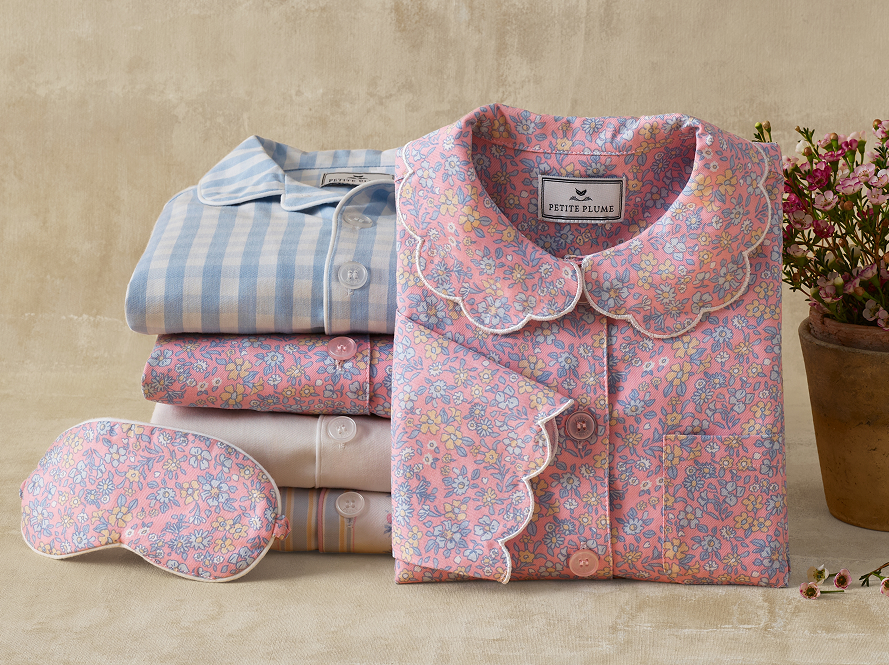
The fit of sleepwear also plays a role. Garments that restrict movement or bunch uncomfortably interrupt the natural repositioning that occurs dozens of times throughout the night. Well-designed pajamas adjust with the body, allowing easier movement without causing wakeups. Explore Petite Plume’s sleepwear collections for styles designed with all of this in mind.

Why Natural Fibers Regulate Temperature Better
Not all fabrics behave the same overnight. The differences between natural and synthetic fibers become most apparent during sleep, when the body is working hardest to manage its own temperature without conscious assistance.
Cotton, particularly long-staple varieties such as Pima, absorbs moisture while remaining breathable. The fiber structure allows air to circulate close to the skin, drawing heat away from the body and releasing absorbed moisture rather than holding onto it. The result is a more stable microclimate between the skin and fabric, which supports uninterrupted sleep. If you're researching the best sheets for the same reason, the same principles apply.
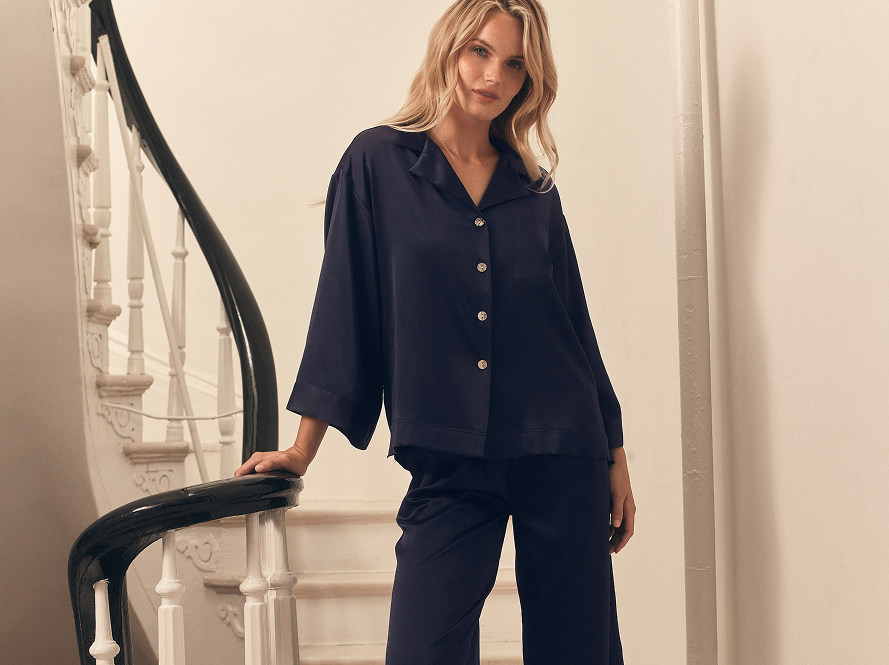
Silk regulates temperature through a different mechanism entirely. Its natural protein structure resists heat transfer, staying cool when the body is warm and retaining warmth when the body cools. It also has the lowest friction of any natural fiber, which matters more during sleep when unconscious repositioning is common. For a deeper look at what makes silk and cotton sleepwear worth the investment, see our guide to luxury sleepwear.
Synthetic fabrics, such as polyester and nylon, lack these properties at a structural level. They do not absorb moisture effectively and tend to trap heat, which can cause body temperature to climb during sleep rather than remain at the lower level that supports deeper sleep stages. Some activewear synthetics have improved moisture management, but even the best performers are less comforting than natural materials during extended periods of sleep.
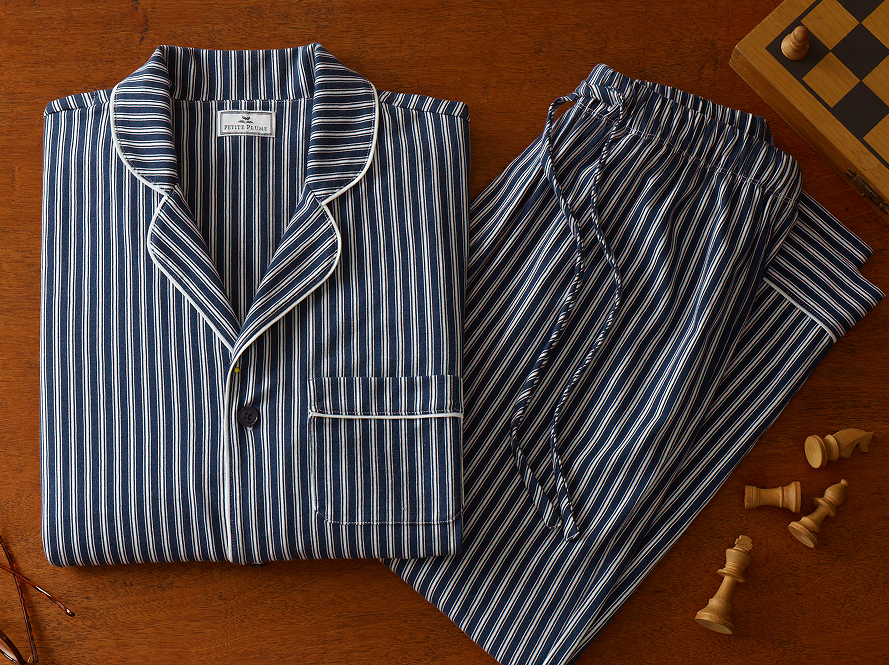
Try This: If you’re a warm sleeper, consider lightweight Pima cotton pajamas for a breathable feel that’s even cooler to the touch.
Don’t Do This: Avoid sleeping in moisture-wicking activewear, which pulls away sweat during shorter bursts but can trap moisture against skin over longer periods.
The Role of Ritual in Better Sleep
Modern sleep science has proven what many of us know intuitively: the body and mind don't switch from full engagement to restful sleep instantly. They need a transition. The clinical term is "sleep onset," and the conditions that support it are largely behavioral — a series of cues, repeated consistently, that train the nervous system to begin winding down. For anyone researching sleep hygiene tips, this is where the highest-return habits live.
Rituals work because they are recognized patterns. When the same sequence of actions precedes sleep each night, the brain begins to associate those actions with the physiological shift toward rest. The smell of a particular soap, the sound of a fan, the act of changing into your favorite sleepwear — each becomes a conditioned cue. Researchers studying pre-sleep routines have found that consistent rituals reduce “cognitive arousal,” meaning the busy, restless thinking that can stop people from falling asleep.
The ritual of changing into comfortable sleepwear serves a psychological function, marking the end of a day’s active performance. Clothing carries social meaning, and the act of removing daytime clothes and putting on pajamas tells the nervous system that the demands of waking life are temporarily suspended. Sleepwear that's soft, comfortable, and targeted toward quality rest reinforces that nightly signal. To keep your sleepwear performing its best, see our guide on how to wash pajamas.
Creating Bedtime Routines for Children
Children are more dependent on predictable routines than adults because their developing nervous systems rely on pattern recognition to feel safe. A consistent bedtime routine is one of the most well-supported interventions in pediatric sleep research, associated with faster sleep onset, fewer nighttime wakings, and better behavioral regulation the following day.
The structure typically spans 20 to 45 minutes and might include bath time, lotion, pajamas, and a soothing story — with the exact steps being less important than the fact that they happen in the same order, at the same time, with the same gradual transition from higher to lower stimulation.
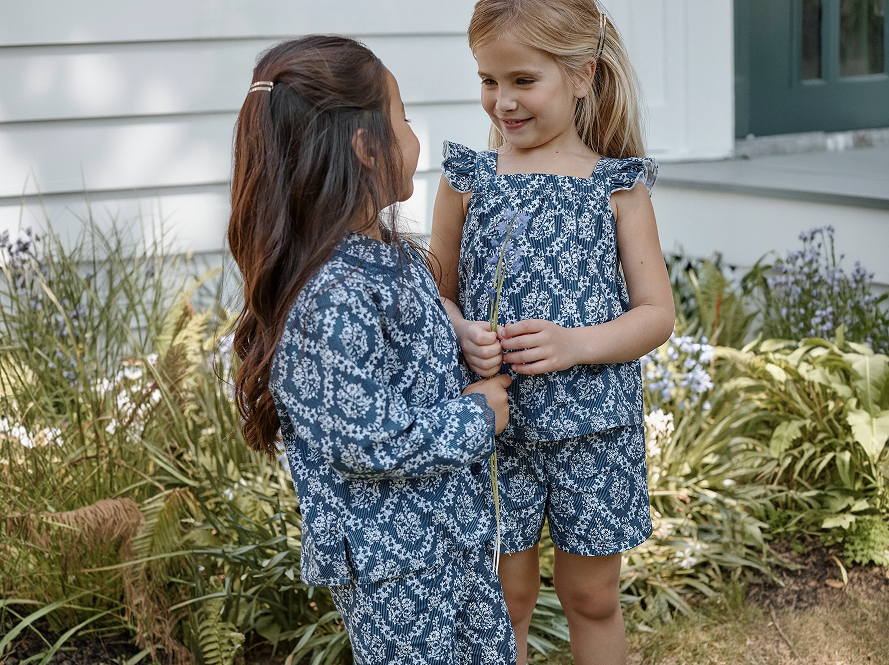
For young children, putting on pajamas is often the clearest signal that the day is ending. Pajamas that children genuinely want to wear — that they choose and that feel good — can convert a potential point of resistance into a moment of cooperation.
Bedtime routines for better sleep should also include a consistent wind-down of environmental stimulation. That means lower lighting, quieter sounds, and a shift away from screens in the 30 to 60 minutes before sleep. Blue light suppresses melatonin production, but the broader issue is cognitive engagement. Games, shows, and interactive content keep children in a state of alertness that the entire bedtime routine is designed to undo.
Sleep Hygiene for Families
Sleep hygiene is a clinical concept that describes the habits and environmental conditions that support quality rest. While it’s often discussed in the context of individuals, it’s also important in different ways for family dynamics. Parents' sleep affects children, and children's sleep affects parents, in cycles that can either refresh or deplete the group. The following sleep hygiene and sleep environment tips apply to the household as a whole.
Align wake times. Consistent wake times are actually more powerful anchors for the circadian rhythm than consistent bedtimes. When everyone in a household rises at approximately the same time each morning, the pressure toward sleep builds predictably by evening, making bedtime easier for children and adults alike.
Create distinct sleep environments. The bedroom — or, for young children, the sleep space — should be associated primarily with sleep. Toys, homework, and screens belong in other rooms.
Model the behavior you want to see. When adults have visible wind-down rituals, speak about sleep positively, and prioritize their own rest, children absorb that framing. When parents fall asleep on the couch with the television on or regularly stay up far too late, children notice that, too.
Dress for sleep intentionally. The same principle that applies to children's pajamas applies to adults. Wearing dedicated sleepwear that's breathable and temperature-appropriate is a cue that supports sleep onset. Browse Petite Plume's sleepwear collections for the whole family.
Address sleep debt proactively. One overtired child or adult can disrupt an entire household's rhythm. Sleep debt accumulates quickly in families during busy periods, and catching up on weekends only partially offsets the deficit. Building adequate sleep time into the schedule is one of the single most effective family sleep hygiene tips.
Frequently Asked Questions
Does what you wear to bed actually make a difference in sleep quality?
Yes. Natural fiber garments that support thermal comfort — the body's ability to maintain an optimal temperature during sleep — are associated with fewer nighttime wakings and longer time in restorative sleep stages.
Is it better to sleep in loose or fitted sleepwear?
Airy, non-restrictive pajamas generally support better sleep for adults because they allow unrestricted movement during the night's many positional shifts. The important factor is that the garment does not bunch, bind, or create pressure points over the course of the night.
Why do I wake up at night?
Nighttime waking has several common causes, but thermal discomfort is among the most frequent and least recognized. If the body overheats during sleep — often due to synthetic bedding or sleepwear that traps heat — it will move into a lighter sleep stage or wake entirely to regulate temperature. Stress-related cognitive arousal, inconsistent sleep schedules, and environmental disruptions such as light and noise are other common culprits.
What is the best sleep routine for adults?
The most effective adult sleep routines share a few themes: a consistent wake time, a 30-minute wind-down period before bed that avoids screens and high stimulation, and a set of repeated cues that signal to the nervous system that sleep is approaching. Changing into dedicated sleepwear is one of the simplest and most effective of those cues.
At what age should children have a consistent bedtime routine?
Pediatric sleep specialists generally recommend beginning a consistent bedtime routine as early as six to eight weeks of age. With consistency, children begin to associate a routine with rest. Children who have never had a consistent routine can develop one at any age with patience and repetition.
Why do children often resist bedtime even when they are clearly tired?
Overtired children frequently experience a cortisol spike that creates a second wind — actual physiological alertness — that makes it harder to fall asleep despite exhaustion. Additionally, the transition from engagement with the world to isolation in a dark room can trigger separation anxiety, particularly in children under age five. A predictable, positive routine addresses both factors: It catches children before the overtired window and replaces the abrupt ending of the day with a gradual, comforting process.
How long should a bedtime routine take?
For children, 20 to 45 minutes is the range most commonly recommended, with infants and toddlers needing less time and school-age children often needing more. Adult wind-down routines are most effective when they span at least 30 minutes, though any consistent pre-sleep ritual is better than none. The key is not duration but repetition.
What is the best sleepwear material for children?
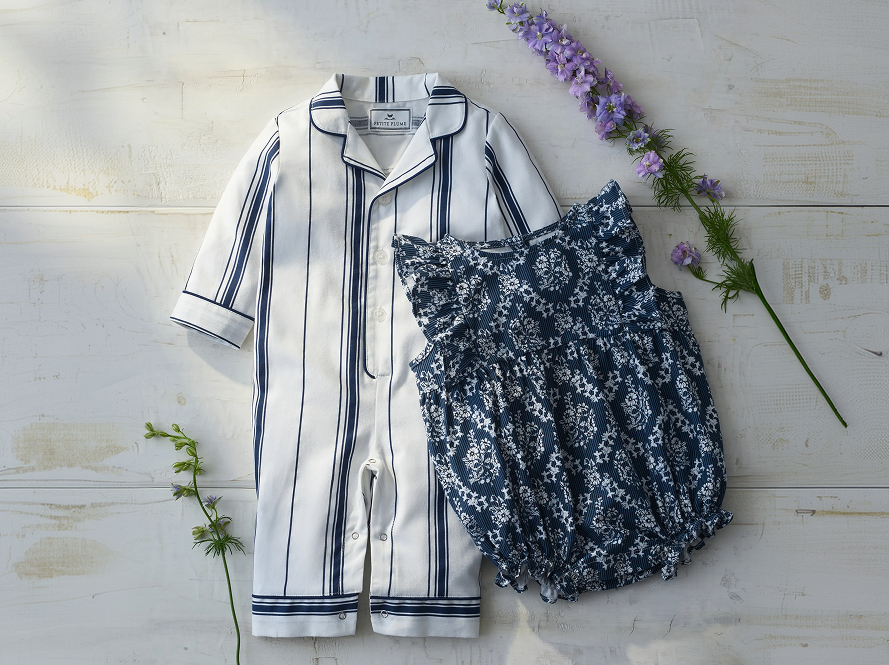
Natural cotton is widely considered the optimal choice for children's sleepwear. It is breathable, gentle on sensitive skin, and durable enough to withstand both energetic wear and frequent washing. Pima cotton offers an elevated softness and a tighter weave that maintains its quality over time.
Summary
The science of sleep and comfort comes down to straightforward principles that are transformative when applied consistently. What we wear to bed affects how quickly we fall asleep and how well we stay asleep. Ritual prepares both the body and the mind for sleep, and nowhere is this more true than with children, whose developing nervous systems depend on predictable patterns. Family sleep, viewed as a whole, improves when adults prioritize their own rest alongside their children's.
None of this requires elaborate effort. It requires paying attention to the conditions we create around sleep, the fabrics we choose to wear, and the small ceremonies that close each day. Repeating simple rituals helps us look forward to great sleep — deep, refreshing, restorative sleep — night after beautiful night.
Explore Petite Plume sleepwear in 100% Pima cotton or mulberry silk for breathable comfort year-round.


