




Best Pajamas for Every Stage of Pregnancy: A Trimester-by-Trimester Guide
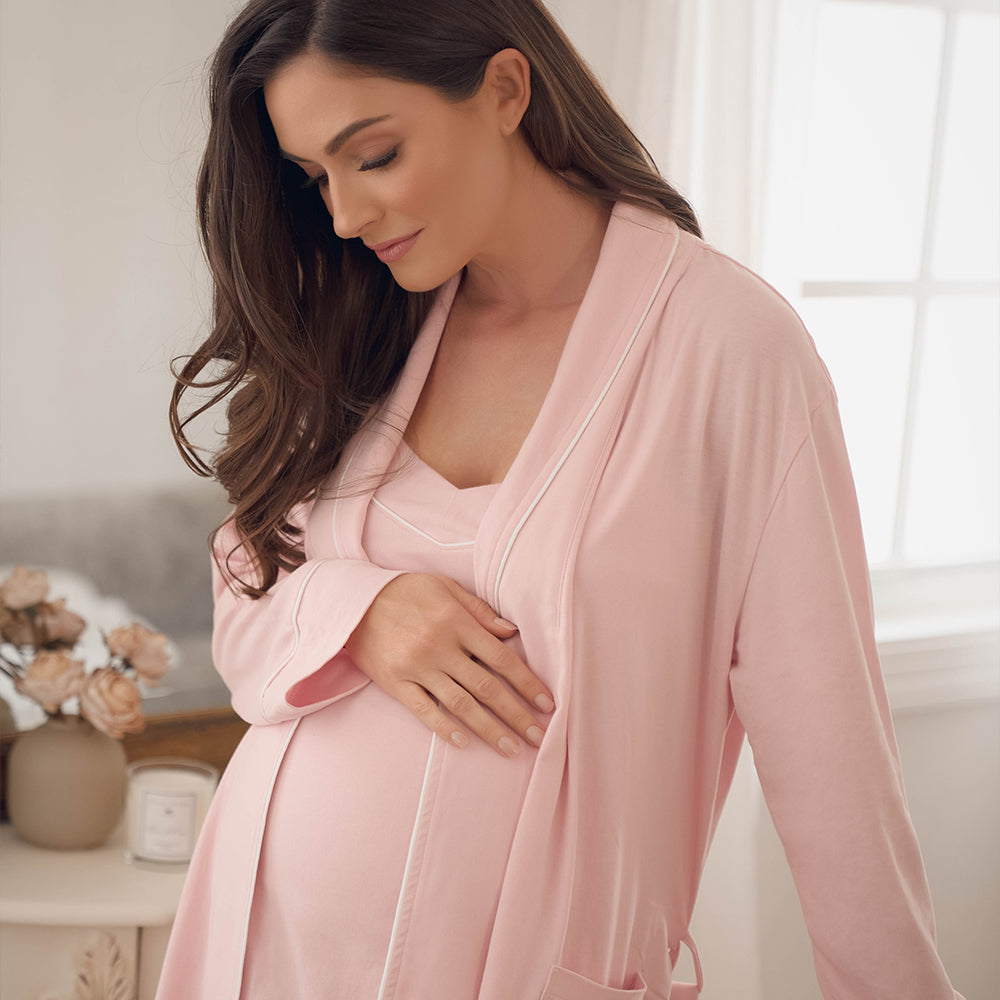
For the first restless nights and the last stretch before baby arrives, sleep changes with the body during pregnancy. The right pajamas grow and shift right along. This guide walks through what to look for, stage by stage, so rest feels easier from the first trimester through the weeks after birth.
What to Look for in Pregnancy Pajamas
The best pregnancy pajamas share three qualities: breathable natural fabric, room to grow, and easy nursing access. Maternity pajamas are sleepwear cut and styled to fit a changing body through pregnancy and beyond. The best pairs carry a body through every stage, then keep going long after.
For a piece worth its place in the drawer, look for softness that lasts and a cut that adapts. A set that fits in early pregnancy and still works during night feeds is the one to reach for again and again.
Breathable, Natural Fabrics
Breathability matters most when the body runs warm, and pregnancy turns up the heat. Natural fibers let air move and help skin stay cool through the night.
Peruvian Pima cotton: a buttery soft cotton that breathes and stays comfortable year-round. Lightweight Pima: the same Pima fibers with an even airier weave, made for hot sleepers, with full coverage and never sheer.
Both let the body breathe while it does the hard work of growing a baby.
Room to Grow
A changing shape needs a versatile cut. Look for stretchy or adjustable waistbands, roomier tops, and easy silhouettes that move with a growing bump.
Sizing up regular pajamas only goes so far. A larger size adds length and width everywhere at once, which leaves the waist loose and the shape off. Maternity cuts add room where the body actually needs it.
Nursing-Friendly Details
Nursing-friendly details make night feeds simpler in the dark. The features to look for keep access seamless and keep the rest of the garment in place.
Clip-down straps: open with one hand for easy feeding.
Button plackets: unbutton from the top for quick access.
Built-in shelf bra: offers gentle support without requiring a separate garment.
These are especially helpful in late pregnancy and throughout the postpartum weeks, when feeds happen around the clock.
First Trimester: Comfort Before the Bump
During the earliest weeks, there usually isn’t much of a bump to dress. Changes are subtle on the outside, but sleep already feels different. Tenderness, warmth, and tiredness arrive early, even when many clothes still fit as they did before.
Regular pajamas may still work in these first weeks, so the goal is simple: soft, breathable styles that feel good against warm skin. Start with a set worth reaching for later, again and again..
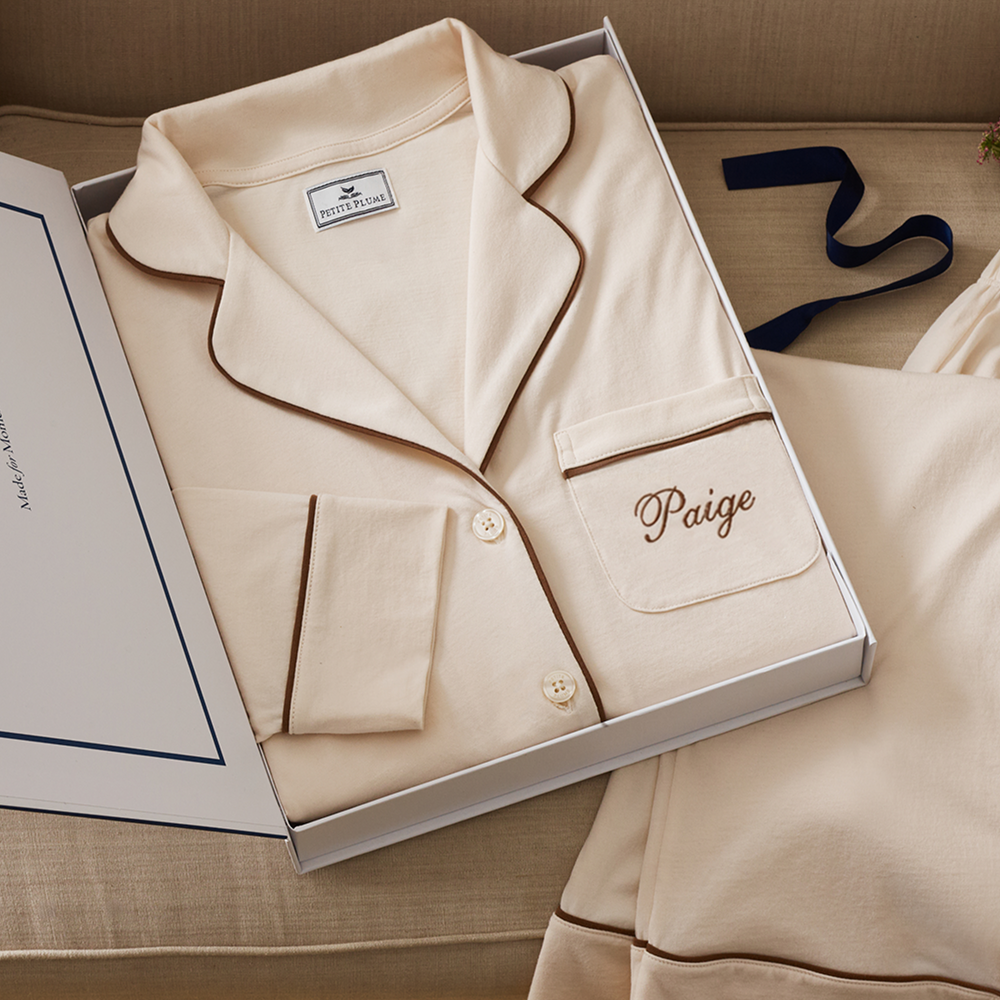
A buttery soft Pima cotton set or nightgown is a comforting choice for the moment. Pima feels soft immediately, stays cool through early warmth, and carries forward into every stage that follows.
Second Trimester: Room to Grow
For the middle stretch, the bump becomes the main thing to fit. This is the stage where a growing waist decides which pajamas work and which get folded away.
Stretchy waistbands, wide-leg or adjustable pants, and roomy tops all keep pace with physical changes. This is also the stage when many people start investing in maternity-specific sleepwear, since regular cuts start feeling less comfortable.
A Pima cotton maternity set fits this phase well, especially one with a nursing camisole and a softwaistband. The camisole layers cleanly under the top, and the waistband sits gently below a rounding belly. Pieces made for this trimester grow with the body instead of working against it.
Third Trimester: Cooling and Coverage
During the final weeks, staying cool is a challenge. Overheating and restless nights tend to peak here, so airy, breathable pieces are essential.
Simple sleep shirts or Pima maternity nightgown styles keep nights simpler, with nothing to twist or tangle when turning over to find a comfortable position. A wide, supportive waistband sits comfortably under a full bump without digging in.
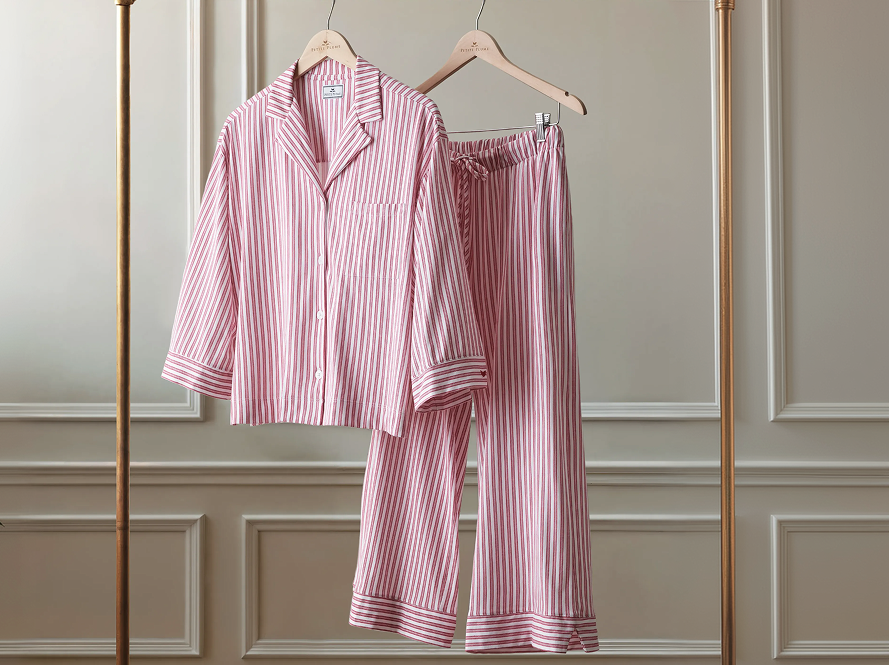
Lightweight Pima is the hot-sleeper choice for this stage. It’s light-as-air, drapes beautifully, and still gives full coverage, so it feels cool without ever turning sheer.
Here is how classic Pima and lightweight Pima compare:
|
|
Classic Pima Cotton |
Lightweight Pima |
|
Feel: |
Buttery soft |
Buttery soft, airy |
|
Weight: |
Year-round |
Light-as-air |
|
Best for: |
Every stage |
Hot sleepers, warm weeks |
|
Coverage: |
Full |
Full, never sheer |
The Fourth Trimester: Postpartum, Nursing, and Recovery
The fourth trimester is the stretch of weeks right after birth. It is a season of recovery, round-the-clock feeds, and learning a new rhythm at home.
For the nights that run into mornings, quality sleepwear earns its keep. Nursing-friendly access makes night feeds more comfortable, gentle waistbands sit soft and avoid irritating a C-section incision, and easy-care pieces hold up to constant laundering.
A few things are worth packing for the hospital: a nursing-friendly set, a soft nightgown, and coordinating styles for coming home. Here is a simple checklist:
For feeds: clip-down straps or a button placket for quick, one-handed access.
For recovery: a gentle waistband that sits away from an incision.
For coming home: coordinating family styles for first-morning and first-photo moments.
A nursing-friendly Pima cotton maternity set covers the feeds and the recovery weeks with buttery soft comfort. For those first mornings home, coordinating family styles bring everyone into the same print, from the Olivia collection for parents to a coordinating print for the baby.
Frequently Asked Questions
When should you start wearing maternity pajamas?
Most people reach for maternity pajamas in the second trimester, when a growing bump makes regular waistbands feel tight, but tender, warm skin may call for softer sleepwear even earlier.
Can you wear regular pajamas during pregnancy?
Regular pajamas often work through the first trimester and sometimes into the second, but as the bump grows, maternity cuts add room where the body needs it rather than everywhere at once.
How many pairs of pregnancy pajamas do you need?
A few well-chosen sets usually cover it, since breathable, nursing-friendly pieces can be laundered and worn on repeat throughout pregnancy and the postpartum months.
What pajamas should you pack in your hospital bag?
Pack a nursing-friendly set with clip-down straps or a button placket, a soft nightgown, and a coordinating style for coming-home and first-photo moments.
Are all maternity pajamas nursing-friendly?
No, not every maternity style includes nursing access, so look for clip-down straps, a button placket, or a built-in shelf bra if you plan to feed through the night.
What pajamas are best after a C-section?
After a C-section, choose a gentle, high waistband that sits away from the incision, and pair it with a nursing-friendly top or sleepwear made for recovery for easy feeds while you heal.
For the first restless nights and every morning that follows, sleepwear should work with the body and the new rhythms at home. A classic pajama set moves through pregnancy, postpartum, and the years after, ready to be passed down when the time comes.