




Monogrammed Pajamas: Styles, Placement, Etiquette & Personalization Guide
There’s something about adding initials onto a garment that changes its character entirely. The fabric is the same, and so is the cut. But the addition of that subtle personalization transforms a beautiful object into a one-of-a-kind keepsake.
Monogrammed sleepwear taps into both the ritual of intentional rest (link to “sleep as luxury” article) and the enduring appeal of customization done well. Pajamas with monograms are worn nightly, for years. They’re present at the quiet, unhurried hours that belong only to the wearer.
This guide will help anyone who wants to give, receive, or simply indulge in monogrammed sleepwear done right. Learn about the history behind the tradition, the styles and placements worth knowing, the subtle etiquette, and everything you need to make the decision with confidence.
_____
Monogramming has long been considered the quiet mark of a thoughtful gift, transforming even the most practical item into something cherished. On sleepwear in particular, the tradition feels especially fitting. These are garments worn in private during hours that belong entirely to the wearer. This guide covers everything worth knowing about the practice of monogramming, from the styles and placements that work best on pajamas to the etiquette that ensures the gesture lands exactly as intended.
A Brief History of the Monogram (And Why It Still Feels Special)
The monogram is older than most people realize. The earliest known examples appear on ancient Greek coins, with rulers marking their currency as a declaration of authority. By the medieval period, monograms had become the shorthand of royalty and the church, embroidered onto vestments, stamped into wax seals, and carved into the facades of buildings.
In the Victorian era, embroidery became accessible to the middle class. The tradition of the trousseau — the collection of fine linens, clothing, and household goods a bride assembled before marriage — spread across Europe and America. Monogramming became a way for families of every station to mark their finest possessions with meaning before a wedding
The 20th century brought monograms into high fashion, from Louis Vuitton's interlocking LV to Coco Chanel's double Cs. As the Victorians had discovered, that mark of identity carried weight that no amount of plain fabric could replicate.
Today, the monogram has shed any associations with fussiness or formality and become a quiet gesture of individuality. On a pajama set worn during the most private hours of the day, it feels especially personal. A small, deliberate act of claiming something entirely as your own.
Why Monogrammed Pajamas Make the Best Personalized Gift
Monogrammed pajamas have a touch of personalization that’s practical, not purely decorative. They’re worn night after night for as long as the recipient owns them, which for thoughtfully crafted pajamas means years.
Pajamas are personal without being intrusive. They don't require the giver to know the recipient's home decor preferences, their jewelry taste, or their hobbies. A well-chosen pajama set in a quality fabric with a thoughtfully placed monogram requires only that you know the person's name and cared enough to do something with that information.
The occasions for monogrammed pajamas are nearly endless, but a few are particularly resonant:
- Bridal showers and bachelorette weekends are occasions where monogrammed styles are frequently photographed. A monogrammed pajama set with the bride's new initials (or her current ones) has become one of the most beloved gifts in the bridal space. A matching set for bridesmaids, each embroidered with individual initials, feels both cohesive and personal. For advice on monogrammed styles, book an appointment with the Petite Plume Bridal Concierge.
- New baby and new parent gifting offers another natural moment. A baby's first monogrammed pajamas — initials embroidered on a soft cotton set — are the kind of thing parents hold onto long after the child has outgrown them. A beautifully monogrammed silk or cotton set for a new mother is a rare gift that’s worth treasuring.
- Milestone birthdays call for gifts that feel considered rather than generic. Monogrammed sleepwear is personal without being presumptuous and indulgent without requiring the giver to know anything beyond the recipient's initials.
- Off-to-college gifting lets university students elevate their dorm room, house, or apartment with clothing or bedding that has a personalized touch. It’s also a thoughtful reminder of home when they’re away, without reading as overly sentimental.
- Holiday gifting, and Christmas morning in particular, has its own tradition. The image of loved ones opening gifts in monogrammed family matching pajamas feels heartfelt and timeless.
And then there’s the gift that needs no occasion at all. A customized pajama set given “just because” can prove to be the most heartfelt of all.
The Monogram Styles You Need to Know
Not all monograms are the same, and the style you choose has as much impact as the placement or the thread color. Here’s a look at the formats worth knowing, from a single initial to a full name.
- The single initial is the most modern and minimal expression. Typically, it’s the last name initial for adults and the first initial for children. Especially when rendered in a beautiful script and sized with intention, it adds an effortless flourish.
- The two-letter monogram pairs first and last initials in equal size. It is clean, contemporary, and a good solution when you don't know the recipient's middle name or simply prefer a less formal look.
- The traditional three-letter monogram is classic: first initial, last initial (enlarged and centered), middle initial. This is the one you'd find on Victorian trousseau linens and the inside collar of a bespoke shirt. It is the ideal choice for formal gifting, heirloom pieces, and anyone who appreciates tradition.
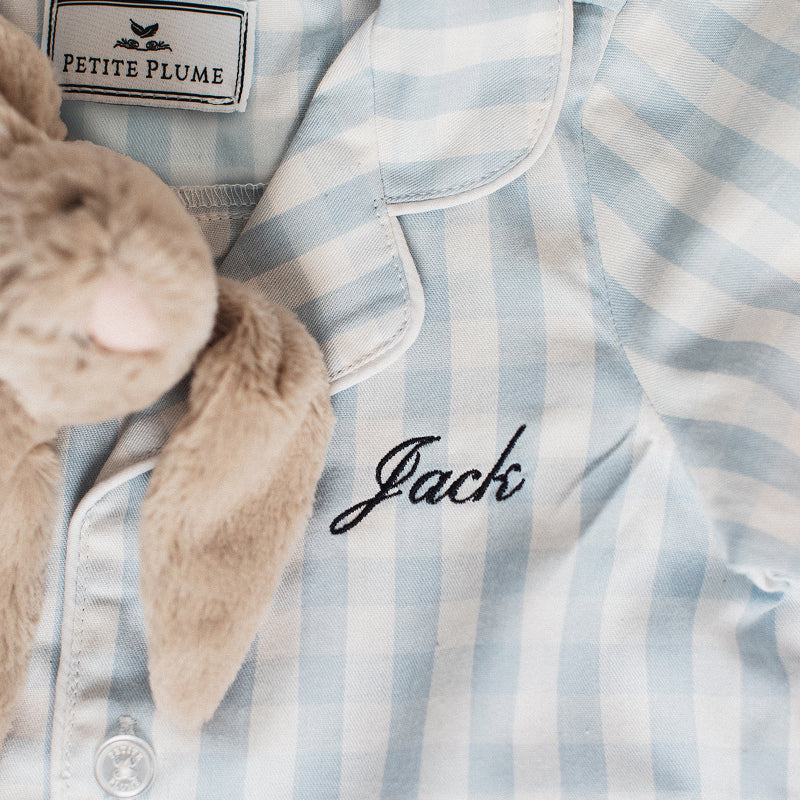
- The full name isn't technically a monogram in the traditional sense, but it’s a beloved option for those who want something more expressive. A first name feels warm and personal — especially charming on children’s pajamas or as a gift for a new baby. A surname carries a sense of family and legacy, and works elegantly for family matching sets, wedding gifts, or anyone who wants their sleepwear to feel like it belongs to a household.
Block versus script is largely an aesthetic choice. Block lettering is graphic, modern, and strong. Script is softer, more personal, and more closely associated with the monogram tradition.
Monogram Placement: Where It Goes and Why It Matters
Although there’s no single right answer, understanding the options allows you to make an intentional choice:
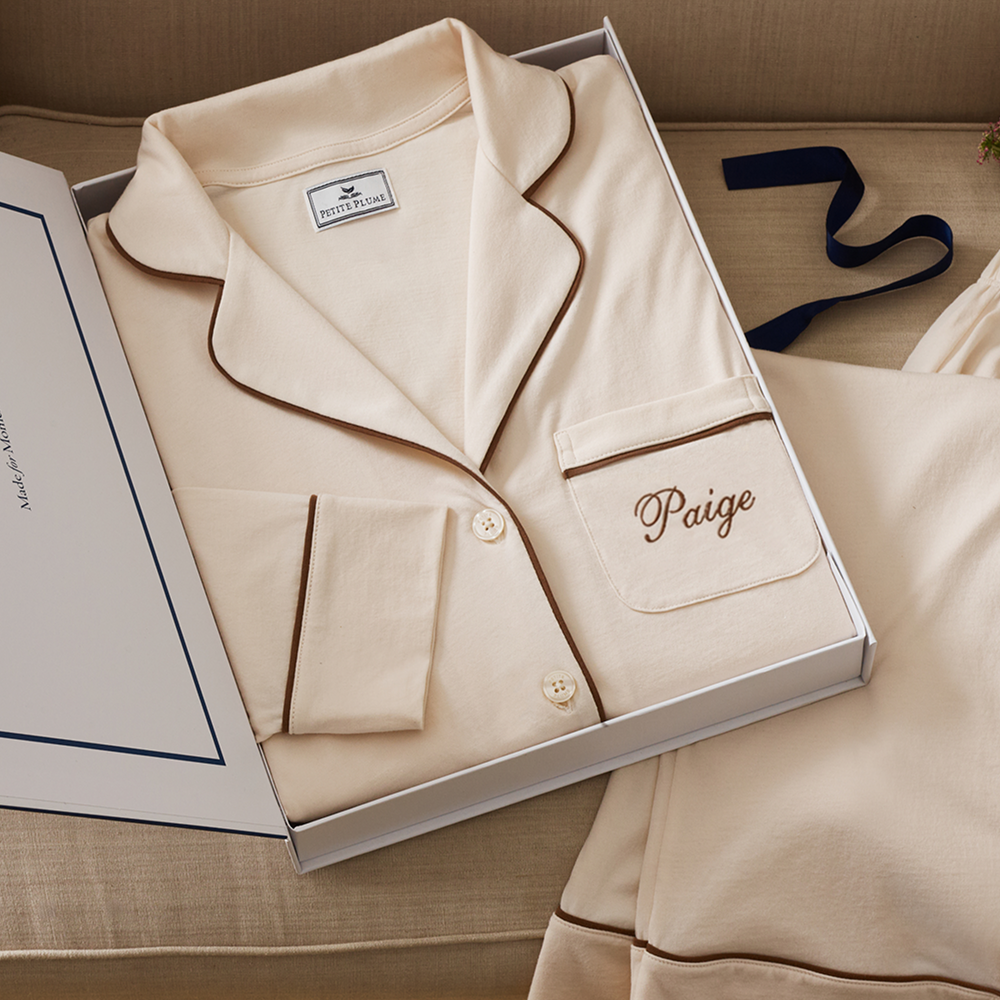
- The left chest or chest pocket is the most classic placement for pajama tops and the one with the deepest heritage in tailored clothing. It is understated, traditional, and immediately legible without being prominent.
- The collar or cuff is elegant and subtle. A monogram on the cuff is visible when a sleeve is rolled or extended. On a pajama top worn open at the collar, initials at the collar point have the same quality: private and refined.
- The center chest is bolder and more contemporary. A single large initial reads as a design element as much as a personal mark. It’s graphic, intentional, and modern.
- The back yoke (the panel across the upper back of a top, such as with tailored shirts) is a unique placement for sleepwear. It is uncommon enough to feel distinctive and positioned well enough to be visible when a robe is open or a top is worn casually.
Placement is everything. A monogram on the cuff is a whisper, while one on the center chest is a statement. Both can be correct, though it depends on who's wearing it.
Thread Color: How to Choose the Right One
The simplest and most considered starting point is to match your embroidery thread to the piping detail on the pajamas. Many Petite Plume styles feature piping along the collar and cuffs, for example, and a monogram stitched in that same color creates a cohesive, intentional look.
From there, the palette opens up. The fundamental choice is between contrast and tone-on-tone:
- High contrast is graphic and modern. The monogram is clearly visible and makes a more definitive visual statement. Examples: white thread on navy fabric, navy on white, gold on ivory.
- Tone-on-tone is quiet and refined. The monogram is there when you look for it, but it doesn't lead the eye. On fine sleepwear, tone-on-tone often reads as more elevated precisely because of its restraint. Examples: ivory thread on white, navy on deep blue, blush on pale pink.
A few combinations that also work well as alternatives:
- White thread on a classic navy stripe looks crisp and fresh.
- Navy or deep green on white or ivory offers a traditional, tailored feeling.
- Gold on ivory or pale pink creates a celebratory warmth that suits the holidays, bridal gifting, or baby showers.
- Blush on white reads as romantic and feminine.
For gifting, a thread color that coordinates with the pajamas rather than contrasting sharply tends to feel more considered. It suggests that the giver thought about the whole experience to create a cohesive impression.
Monogram Etiquette: The Unwritten Rules
Monogram etiquette has a long and specific tradition, and while the rules have relaxed considerably in recent years, knowing the background allows you to make an informed decision.
On a gift, the initials should always be the recipient’s, not the initials of the gift-giver. This sounds obvious but bears saying directly.
The traditional order for a three-letter monogram places the last initial at the center in a larger size, with the first initial to the left and the middle initial to the right. So for someone named Elizabeth Anne Campbell, the monogram would read E — C (large) — A.
Couples’ monograms follow their own logic. For a wedding gift to a couple who will share a last name, the most classic format is the bride’s first initial, shared last name initial (large, center), and then the groom’s first initial. For couples who maintain separate surnames, a shared monogram is less straightforward. A single initial representing the shared last name or separate individual monograms are both graceful solutions.
Children's monograms are charming as a single first initial. It is playful and avoids the slightly formal quality of a three-letter monogram on a child.
Etiquette Cheat Sheet:
- Single initial: last name for adults, first name for children
- Three-letter traditional: first, last (center, larger), middle
- Couples: bride’s first initial, shared last (center, larger), groom’s first initial
- Always confirm spelling and middle name before customizing
- When in doubt, a single initial is always correct
Caring for Monogrammed Sleepwear
On a monogrammed pajama set, the embroidery that personalizes it also makes it more delicate. A few simple fabric care habits will protect that sentimental touch through years of use.
- Turn garments inside-out before laundering. This does more than almost anything else to extend the life of embroidery. The friction of a wash cycle can loosen thread over time, and reversing the garment puts the embroidery on the protected interior side.
- Wash on a gentle or delicate cycle in cool water. High heat in the wash or the dryer is the primary cause of thread degradation and fabric shrinkage around embroidered areas. A cool, gentle wash protects both.
- Dry on low heat or lay flat. High heat in the dryer is as damaging as in the wash. For Petite Plume cotton styles, a low tumble dry or a flat lay is ideal. For silk, laying flat to dry is always preferable.
- Store pieces folded, not hung. Over time, hanging sleepwear can stretch the fabric around the collar and shoulder. On embroidered areas, prolonged tension can loosen stitching. A folded drawer or shelf keeps the garment’s shape and protects the embroidery.
With proper care, a well-made monogrammed pajama set can remain in regular rotation for years. Beyond that, the memories can last forever.
Try This: Turn monogrammed pajamas inside-out before every wash, and tumble dry on low or lay flat to dry. These two habits will keep the embroidery crisp and the fabric soft for years.
Beyond Pajamas: Monogramming for the Home
The monogram doesn't have to stop at sleepwear. Petite Plume decorative pillows can be monogrammed to carry the same personal touch into the broader home.
A monogrammed pillow makes a natural companion to a pajama set for gifting, or a considered addition to a bedroom that’s been thoughtfully designed. The same etiquette and thread recommendations apply for both apparel and other gifts.
Frequently Asked Questions
What is the correct order for a monogram?
The traditional three-letter monogram places the last name initial at the center in a larger size, with the first initial to the left and the middle initial to the right. For someone named Elizabeth Anne Campbell, the monogram would read E — C (large) — A. In contemporary contexts, many people use a simplified first, last format in equal size. When in doubt, a single initial is always an appropriate alternative.
Do you monogram the first or last initial?
For adults, this type of personalization traditionally uses the last initial. For children, the first initial is more common.
How long does monogramming take?
At Petite Plume, standard monogramming typically adds 4–6 business days to the production time of an order. During peak gifting periods, including the weeks leading up to Christmas, timelines may extend, and Petite Plume will post holiday ordering deadlines online. If you are ordering for a specific occasion, it’s always worth checking current lead times.
Can you monogram silk pajamas?
Yes. The Petite Plume silk collection is available for monogramming. Embroidering on silk requires additional care due to the fabric's delicate weave, but when done well, a monogram on silk has unmatched elegance.
What size should a monogram be on pajamas?
The size of a monogram depends on its placement and style. For a chest or pocket placement, monograms typically range from ¾ inch to 1½ inches tall — small enough to feel refined rather than bold. Cuff and collar monograms tend to run smaller, around ½ to ¾ inch, where subtlety is the point. A center chest monogram, by contrast, can be read as a deliberate design element and may be sized larger, from 1½ to 2½ inches. As a rule, a monogram should feel like a quiet flourish rather than a label.
Are monogrammed pajamas a good wedding gift?
They’re one of the best. A monogrammed pajama set is personal but practical in a way that many wedding gifts are not. For anyone changing their last name, a set monogrammed with new initials in the week or two before the wedding is a gift that tends to be remembered. For the couple, a shared monogram or complementary sets are beautiful options.
Is it rude to give a monogrammed gift?
The short answer is no, with one nuance. A monogrammed item, by design, may not be returned or exchanged. The gesture is a generous one that also carries an implicit confidence that the recipient will want the item and appreciate the personalization.
Can you monogram children's pajamas?
Yes, and that’s one of the most charming applications of the tradition. Children’s monogramming often uses just the first initial to remain playful and clear on a small garment. Petite Plume children's pajamas can be monogrammed and hold up beautifully through active wear and frequent washing.
What if I don't know the recipient's middle name?
A single initial or a two-letter first-and-last monogram is an elegant solution. There is no obligation to use all three letters. When in doubt, simpler is better.
The Gift That Carries a Name
A monogram is a small thing, physically. Just a few letters (or even a single letter) rendered in thread on fabric. And yet the care that gesture expresses is endless.
A monogrammed pajama set with heirloom-quality fabric can be enjoyed from the very first night. It will be present for the quiet, unhurried moments at the end of the day. And every time the wearer catches sight of their initials, they’ll get a subtle reminder that someone took time to make something sentimental. An heirloom just for them.