


Silk vs. Cotton Pajamas: Which Is More Luxurious?
When choosing between silk and cotton pajamas, the decision comes down to temperature, comfort, care, and lifestyle. Both carry the understated beauty of natural fibers, and both belong in a well-curated sleep wardrobe. There’s rarely a single right answer — only the right pajamas for you, at that moment.
Silk pajamas and cotton pajamas represent two distinct philosophies of comfort, and understanding the difference allows you to build a sleep wardrobe that serves you well, season after season.

_____
Silk vs. Cotton Pajamas: The Short Answer
Silk pajamas are especially luxurious in feel, drape, and visual elegance, making them ideal for those who run warm, prefer a fluid silhouette, or want sleepwear that doubles as elegant loungewear. Cotton pajamas, particularly those made from long-staple Pima cotton, offer a different kind of luxury: incredible softness, effortless care, and a lived-in comfort that only deepens with every wash. For most people, the answer isn't choosing one over the other, but rather knowing when to enjoy each.
Silk vs. Cotton: Which Is Better?
- Best for everyday use: Pima cotton, which softens with every wash and launders easily
- Best for luxury feel: Silk, for its fluid drape and opulent hand
- Best for hot sleepers: A tie — silk thermoregulates beautifully, while lightweight Pima actively wicks moisture
- Best for low maintenance: Cotton, which is machine-washable and more forgiving
- Best for gifting: Silk, which feels like an occasion from the moment it's unwrapped

What Makes a Pajama Fabric Truly Luxurious?
Luxury in sleepwear is the experience of fabric that works quietly on your behalf: regulating your body temperature, reducing friction against skin, and holding its beauty wash after wash, year after year. Both silk and high-quality cotton are genuinely luxurious, though they achieve it differently.
The most important distinction is fiber quality. Not all silk is created equal, just as not all cotton is. Mulberry silk, the variety used in Petite Plume silk pajamas, is produced by silkworms fed exclusively on white mulberry leaves, resulting in long, uniform filaments and an exceptionally smooth hand. Similarly, Pima cotton pajamas, made from cotton grown primarily in Peru, feature an unusually long staple fiber that produces a fabric that's softer, stronger, and more lustrous than standard cotton. These distinctions are noticeable on the first wear, and they separate sleepwear worth investing in from everything else.
The Case for Silk Pajamas

Silk has long been associated with refinement, and that reputation is obvious each time you wear the fabric.
Mulberry silk is naturally thermoregulating. It responds to the body's temperature, keeping you cool when you're warm and warm when the night turns cool. It’s one of the smoothest fabrics against skin, which means less friction during sleep — and real implications for hair and skin health over time. Its drape is also unmatched. Silk falls and moves with the body in a way no other fabric does, giving silk pajamas an inherent elegance that reads as effortless whether worn in bed or over morning coffee.
Silk is a natural protein fiber, making it hypoallergenic and gentle on sensitive skin. For those who find certain fabrics irritating, or for warm sleepers (link to article) who have historically given up on wearing anything to bed at all, silk is often a wonderful option.
Top Picks: Silk
- Women's Silk Pajama Set in Panthere de Nuit
- Women's Silk Pajama Set in Panthere de Luxe
- Women's Silk Pajama Short Set in Pink Stripe
- Women's Silk Lace Robe in White
-
Men's Silk Pajama Set in Navy
The one consideration with silk is care. It requires more mindful laundering: hand washing or a gentle cycle in cool water, kept away from heat and harsh detergents. For those willing to stay consistent with that care, a quality silk set will last for years.
Don't Do This: Never put silk pajamas in a hot dryer or expose them to extended direct sunlight. Heat and UV light degrade silk fibers quickly, dulling the luster and softness that make them so distinctive.
The Case for Cotton Pajamas

There's a reason the world's finest hotels have dressed their beds in cotton for generations. Cotton breathes. It absorbs moisture rather than repelling it. It softens with use yet maintains its structure. And when the cotton in question is long-staple Pima, the experience transcends anything the word "comfortable" typically implies.
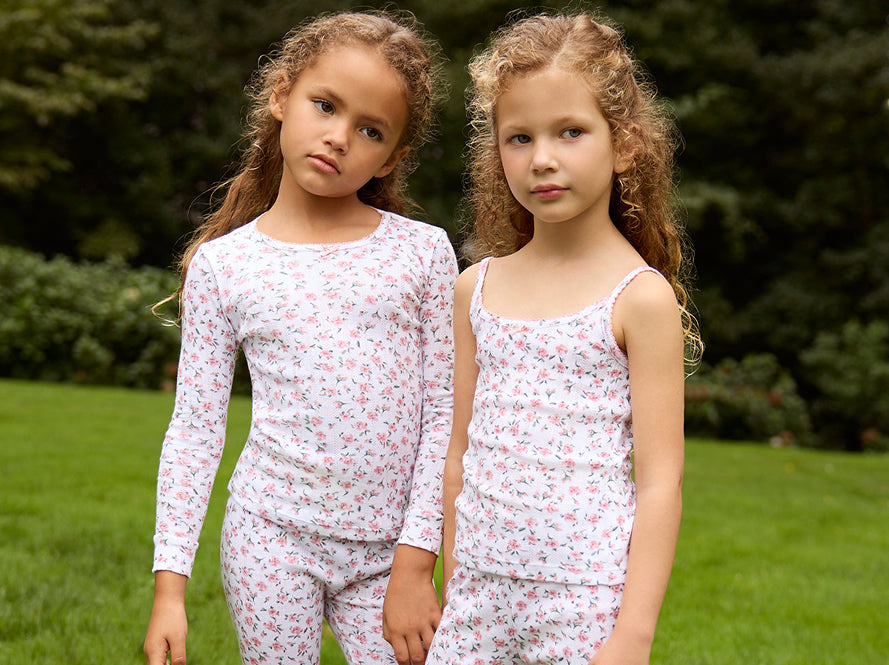
Petite Plume Pima cotton pajamas are made from 100% Peruvian Pima, a fiber distinguished by its extraordinary length, natural luster, and resistance to pilling. The result is pajamas that feel noticeably softer than standard cotton from the very first wear, and that grow more beautifully soft over months and years of washing. This is the opposite of fast fashion: garments that reward you for keeping them.
The practical strengths of cotton cannot be overstated. It's machine-washable, resilient, and durable enough to be worn nightly without showing fatigue. For families, for those with sensitive skin, for anyone building a sleep wardrobe rather than a single statement piece, cotton is often the ideal foundation.
Top Picks: Cotton
- The Olivia Wide Leg Pima Pajama Set
- The Olivia Pima Short Set
- Women's Pima Pajama Set in Timeless Toile
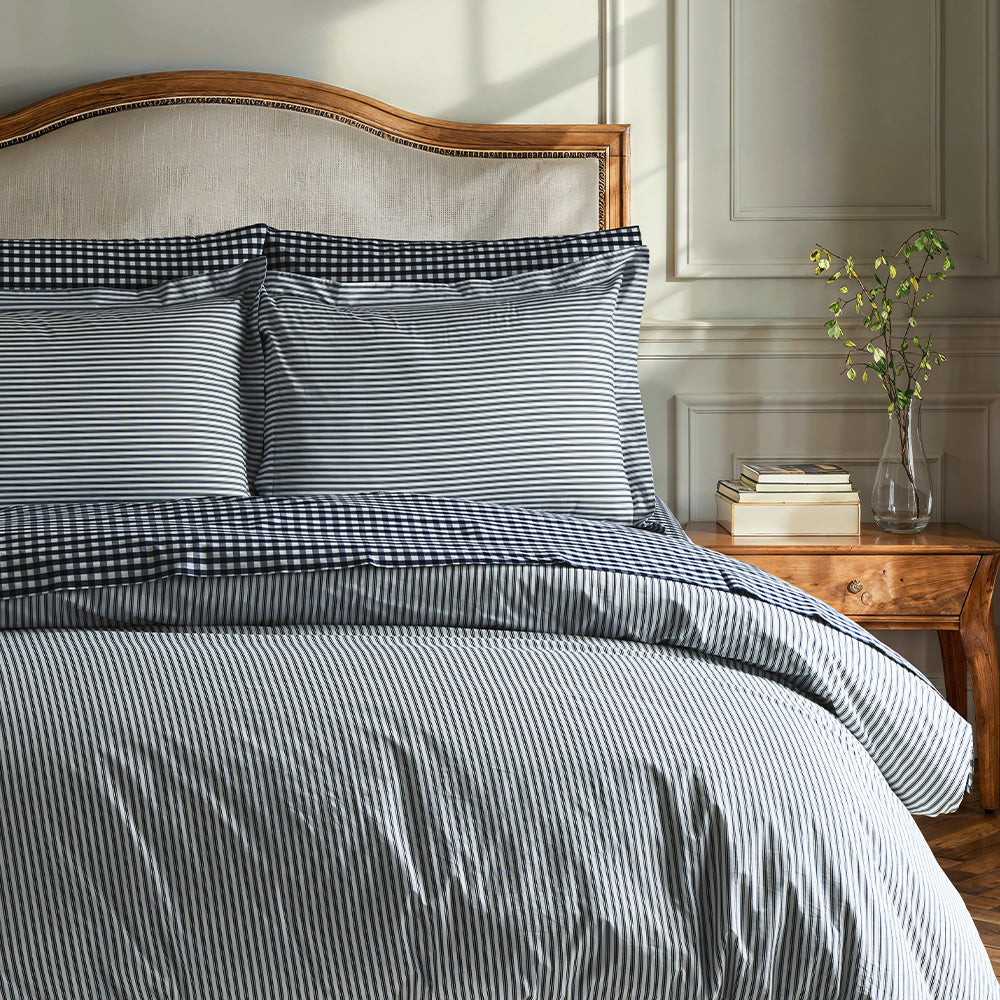
- Women's Pima Short Set in Navy French Ticking
- Men's Pima Pajama Set in Navy
Silk and Cotton vs. Synthetic Pajamas
Both silk and Pima cotton stand apart from a third category of fabrics: synthetic fabrics like polyester, modal, and nylon blends. Synthetics are common in sleepwear, but they work against the body during rest in ways that natural fibers do not. They trap heat rather than dissipating it, which interferes with the body's natural temperature drop at sleep onset. They don't absorb moisture, so perspiration sits against the skin rather than evaporating. And they degrade faster — pilling, losing shape, and stiffening with washing in ways that Pima cotton and silk do not.
For anyone researching the best fabric for pajamas, or weighing cotton vs. polyester pajamas specifically, the difference is clear. Natural fibers support the conditions for better sleep, and synthetics, no matter the style, do not.
Silk vs. Cotton for Temperature Regulation
Silk is a natural thermoregulator. Its protein structure responds to ambient temperature, making it one of the few fabrics that can feel cool in summer and warm in winter without feeling clingy or heavy. For warm sleepers, silk's smooth surface against skin creates minimal friction and allows air to circulate freely.
Pima cotton, particularly in its lightweight weave, is another exceptional warm-weather fabric. It absorbs perspiration rather than trapping it, wicking moisture away from the body and allowing it to evaporate. For very warm sleepers or those who experience night sweats (link to another article – menopause expert or warm sleepers), lightweight Pima cotton's moisture-management properties often outperform silk in pure practicality.
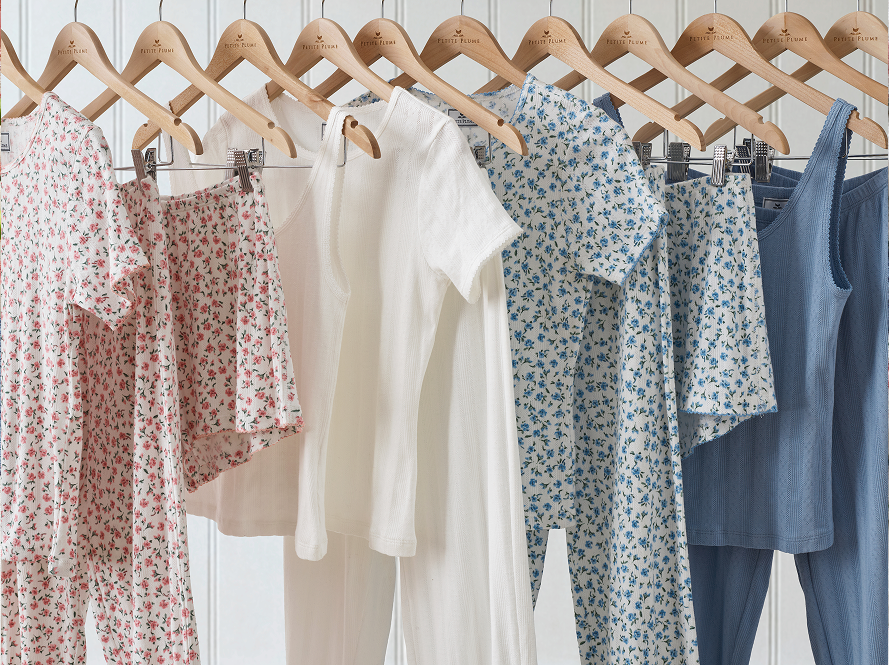
Both regulate temperature beautifully by natural-fiber standards. Silk feels more immediately cool to the touch. Cotton manages moisture more actively. If temperature is your primary concern, the Lightweight Pima Collection was designed with exactly this in mind.
Which Is Better for Skin and Hair?
This is where silk makes its most compelling case. Silk's exceptionally smooth surface creates less friction against skin and hair during the hours you spend in contact with it each night. Dermatologists and hair stylists frequently note that reducing nightly friction can contribute to less mechanical breakage in hair and less compression of delicate facial skin over time.
Pima cotton, while far softer than standard cotton, has more surface texture than silk. For those with particularly sensitive skin or fine hair, this distinction is real. For everyone else, what matters most is that the fabric is 100% natural and free from synthetic blends that trap heat and irritate skin.
Both silk and Pima cotton are hypoallergenic when properly maintained. Neither harbors the heat or bacterial environment that synthetic fabrics can create over time. Silk pajamas are smoother, while Pima cotton pajamas are more breathable. Both are meaningfully better than any polyester or modal alternative.
Caring for Silk vs. Cotton Pajamas
Silk: Hand wash in cool water with a gentle, pH-neutral detergent, or use the delicate cycle in a mesh laundry bag. Lay flat to dry and never tumble dry on heat. Store folded and away from direct light. With this care, a quality silk set maintains its luster and softness for years. For a full breakdown, see our pajama care guide.
Pima cotton: Machine wash cold on a gentle cycle. Tumble dry on low or line dry. Avoid high heat, which can weaken fibers over time, but otherwise Pima cotton is remarkably forgiving. A notable characteristic of long-staple Pima is that it softens with each wash, so a set worn for two years will feel more beautiful than the day it arrived.
Don't Do This: For either fabric, avoid fabric softener. It coats natural fibers with a synthetic residue that reduces breathability over time.
Best Pajamas by Use Case
- Best for hot sleepers: Lightweight Pima cotton, which wicks and breathes actively throughout the night.
- Best for sensitive skin: Silk, since its smooth proteins create minimal friction and irritation.
- Best for everyday wear: Pima cotton pajamas, which launder easily and only improve with time.
- Best for luxury gifting: Silk pajamas, which feel like an occasion from the first wear
Silk or Cotton — Which Should You Choose?
Choose silk pajamas if you run warm and want a cool-to-the-touch fabric, if you want sleepwear that doubles as elegant clothing, if you're gifting for a special occasion, or if you're willing to launder with a little extra care in exchange for a distinctly elevated experience.
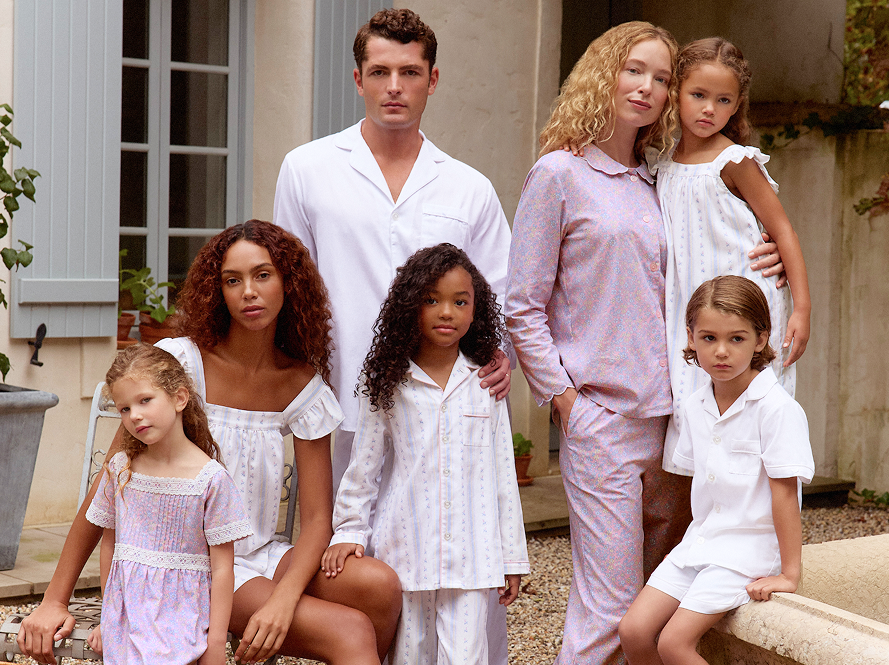
Choose Pima cotton pajamas if you want an exceptional everyday style — the pajamas you reach for every single night. Cotton is also the better choice for sensitive skin, for children, for family matching pajamas, and for anyone who wants a fabric that only gets better with time.
Choose both if you understand that the most thoughtful sleep wardrobe is not a single fabric, but a curated collection.
Frequently Asked Questions
Are silk or cotton pajamas more luxurious?
Both are luxurious, but in different ways. Silk pajamas are more immediately opulent, with a smooth hand, fluid drape, and an elegant sheen. Pima cotton pajamas offer a different kind of luxury: deep, enduring softness that improves over time. The ideal sleep wardrobe makes room for both.
Is silk or cotton better for sleeping?
For most people, premium cotton — especially lightweight Pima — is the better everyday sleeping fabric. It breathes well, manages moisture actively, and launders easily. Silk is exceptional for those who prioritize temperature regulation and a frictionless surface against skin. Explore both in the Petite Plume women’s collection.
Are silk pajamas worth the investment?
Yes, when the silk is high-quality. Mulberry silk is opulent, durable, naturally hypoallergenic, and thermoregulating in a way that synthetic “silky” fabrics cannot replicate. With proper care, a quality silk set will last for years.
What is the best fabric for pajamas for hot sleepers?
Hot sleepers tend to do best in 100% natural fibers: either lightweight Pima cotton, which wicks and breathes, or mulberry silk, which thermoregulates. Petite Plume Lightweight Pima Pajamas were designed with warm sleepers in mind — they’re airy, breathable, and instantly comfortable.
Can I machine wash silk pajamas?
With care, yes. Use a mesh laundry bag, cool water, and the delicate cycle with a pH-neutral detergent. Never tumble dry on heat. Many find that hand washing preserves silk's luster and longevity best. For those who prefer a no-fuss laundry routine, Pima cotton pajamas are the more practical choice. See our full care guide for both fabrics.
What is Pima cotton, and why is it better than regular cotton?
Pima cotton is grown primarily in Peru and features an unusually long-staple fiber. This longer fiber produces fabric that is significantly softer, stronger, and more resistant to pilling than standard cotton, with a subtle natural luster. Petite Plume uses 100% Peruvian Pima in classic pajama sets and lightweight styles.
What are the best pajamas to give as a gift?
Both silk and Pima cotton make exceptional gifts. For someone who loves an indulgent wind-down routine, silk pajamas feel like an occasion. For someone building a beautiful, timeless sleep wardrobe, a set from the Pima cotton collection is a gift they can enjoy every single night.
Summary
Silk or cotton? The answer shapes how you rest at night and how you wake up each morning. Silk pajamas offer thermoregulation, a smooth surface against skin, and a visual elegance that feels like ceremony. Pima cotton pajamas, especially those made from long-staple Pima, offer the deep, everyday luxury of fabric that breathes beautifully, launders effortlessly, and softens with age rather than diminishing. And both leave synthetic fabrics entirely behind — in comfort, in longevity, and in the quality of sleep they support.
The most considered sleep wardrobe is not a single fabric. It’s a collection — built slowly, worn often, and chosen with the kind of care that great rest deserves.